

The Best Purchase Is the One You Can Undo
Smart shopping is usually taught as a hunt for the lowest price. That is only half the job. The better habit is preserving options after the purchase, because regret often starts after checkout, when the item is sitting on the counter and the receipt is already somewhere inconvenient.
The familiar cycle is easy to recognize: excitement in the cart, a little doubt at home, then a missing tag, a faded receipt, or a return deadline that passed while the item was still in the bag. Post-purchase dissonance often peaks in the first day or two, before the product has truly earned a place in daily life.
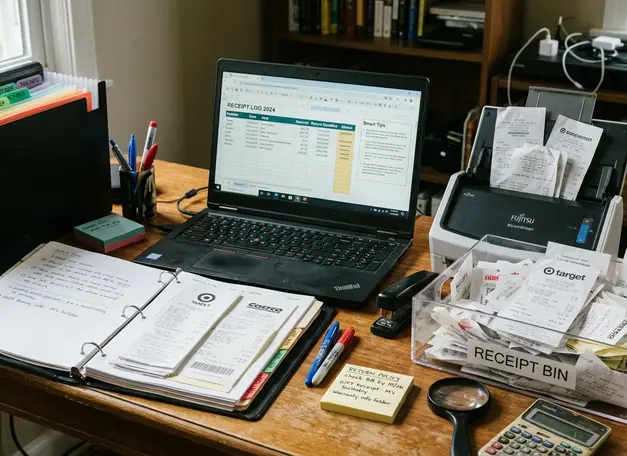
This list treats buying as a small system. It slows the decision before payment and keeps the exit route open after payment.
Main Point: A good deal is not only a low price. It is a purchase with a clear purpose, a known total cost, and a realistic way to undo it if it does not work.
Criteria for Selection: What Counts as a Regret-Reducing Habit
The habits below were chosen because they are repeatable, low-cost, and usable in a store aisle, an online cart, or a crowded holiday shopping weekend. They do not require a complicated budget app or a new personality.
At first, the easier structure seemed to be product categories: electronics, apparel, gifts, home goods. That fell apart quickly. The real trouble spots showed up across categories: unclear need, hidden total cost, missing receipt, removed packaging, or a forgotten deadline.
So the test became practical. Does the habit prevent avoidable friction? Can it work while shopping with kids, comparing retailer policies on a phone, or deciding whether a sale item deserves space at home?
This is not a minimalist shopping manifesto. It is an implementation-focused checklist for buying with a built-in review point. For this topic, ordinary retail purchases are the focus; private sales and specialty orders can follow different rules.
1. Decide the Job Before You See the Deal
The common question is simple: how do you know whether something is a useful purchase or just a tempting one?
Start by naming the job before browsing. The item should replace a broken product, fill a gift need, solve a household problem, or restock an essential. That sentence matters because it gives the purchase a job description.
Vague intentions create space for regret. “I need something nice” can become a sweater that does not match anything, a gadget that duplicates one already in a drawer, or a gift that feels rushed the moment it is wrapped.
A practical test helps: if the item cannot be linked to a specific use in one sentence, put it on a waitlist for several days. Undefined items often lose their pull as the novelty fades.
2. Set the Price Ceiling Before the Sale Price Appears
Discounts can distort judgment because the shopper starts evaluating the markdown instead of the real out-of-pocket cost.
A coat marked down from a high original price can feel responsible even when it is still more than the shopper planned to spend. The original price becomes the anchor. The budget becomes negotiable.
Set the maximum price before opening the product page, walking into the aisle, or comparing holiday promotions. Write it into the shopping list if needed: toaster, up to $40; teacher gift, up to $20; winter boots, up to $90.
Expert Tip: If the sale price is above the ceiling, the discount did not make the item affordable. It only made the overspend look organized.
3. Use a Pause Rule for Non-Essentials
A pause rule works best when it is treated as a behavioral checkpoint, not a moral judgment.
For non-essential carts, wait a day or two before checkout. That window gives enough time to measure the shelf, check the closet, compare the gift list, or notice that the urge was tied to boredom rather than need.
This rule should not apply to urgent replacements, medical needs, or time-sensitive essentials. If the refrigerator part is broken or the child needs shoes for tomorrow, delay can become its own cost.
The advanced version is to move the item from the active cart into a saved list. That small move changes the decision timeline from minutes to weeks, which is often enough to separate a useful purchase from a mood purchase.
4. Check the Return Policy Before You Pay
Return flexibility is part of the purchase, not an afterthought. A product with a tight or costly return path is less flexible than one with a clear refund method and a reasonable deadline.
Before paying, check the return deadline, refund method, restocking fees, final-sale exclusions, gift receipt rules, opened-package rules, and mail-back costs. For online orders, look at who pays return postage. For gifts, confirm whether the recipient can exchange without seeing the original price.
Two small details cause a surprising amount of trouble: assuming a credit card statement alone will suffice for a return, only to be denied because the retailer requires an itemized receipt to process the refund; and missing seasonal policy differences. Return windows fluctuate during the fourth quarter, with some retailers extending deadlines to late January while others keep strict two-week policies for electronics.
Caution: Return flexibility rarely applies to clearance merchandise, personalized items, or digital downloads, which are commonly treated as final sale.
5. Compare the Total Cost, Not Just the Shelf Price
The shelf price is the opening bid. The real cost may show up after checkout.
A cheap appliance may need specialized filters. A lamp may require unusual bulbs. A dress may need tailoring or dry cleaning. Seasonal decor may need storage bins that cost almost as much as the item itself.
Look for secondary costs before buying: shipping, batteries, accessories, subscriptions, repairs, cleaning, storage, and return postage. These extras can add roughly $10 to $35 to the baseline price within the first month of ownership.
The practical question is not “Is this discounted?” It is “What will I have to buy, store, clean, or maintain because I bought this?”
6. Shop From a List, Not From a Mood
List-based shopping feels ordinary, which is why it works.
Boredom browsing, stress shopping, and holiday panic buying all have the same weakness: the product gets judged by emotion first and purpose later. A list reverses that order.
Use separate lists for essentials, gifts, replacements, and optional wants. Essentials can move quickly. Gifts need recipient names and spending limits. Replacements should identify what broke or wore out. Optional wants can wait without guilt.
A beginner can start with one phone note. A more disciplined shopper can keep a saved list by retailer, then check it during sales instead of wandering the site from the homepage.
7. Ask Where It Will Live Before It Comes Home
This habit challenges the purchase before the payment screen does. If the item has no place to live, it is already borrowing space from something else.
For kitchen appliances, picture the counter. For toys, picture the bin. For clothing, picture the hanger, drawer, or laundry routine. The question is concrete: where does this go the day after it arrives?
Allocating a specific footprint for a new appliance before purchase is a useful test because it exposes countertop crowding early. If that space cannot be found without moving three other things, the product may be solving one problem while creating another.
Main Point: Storage is part of the cost. A bargain that needs a permanent home still spends household space.
8. Save the Receipt Immediately
This is the least glamorous habit on the list and one of the most useful.
Do not wait until later. Photograph the receipt before leaving the parking lot, email it to a receipt organization folder, or use the retailer account to confirm that the order history is complete. If the receipt is for a gift, label the photo with the recipient name before the holiday rush turns every bag into a mystery.
Thermal paper receipts can fade to illegibility within a couple of weeks if they sit in a warm vehicle or rub against other paper in a wallet. That is a short window for something that may be needed to recover real money.
A simple naming pattern helps: retailer, item, purchase date, return deadline. The point is not perfect filing. The point is finding the proof of purchase before the clerk or returns portal asks for it.
9. Protect Tags, Packaging, and Barcodes Until the Item Proves Itself
Many shoppers remove tags too early because ownership feels final once the item is home. Treat the first week or two as a review period instead.
Keep tags attached when trying clothing at home. Save shoe boxes until the shoes have been worn indoors long enough to confirm the fit. Keep electronics packaging, inserts, and UPC barcodes together until the product has been tested.
Retailer policies often become stricter when packaging is missing. Original packaging and intact UPC barcodes during the first week or two can make the difference between a smooth return and a store-credit argument.
Caution: Do not cut through barcodes when opening boxes. Use the seam, take a breath, and keep the return path intact.
10. Set a Return Review Before the Deadline

A return deadline is only useful if it appears on the calendar before it becomes urgent.
Set a reminder several days before the actual deadline. That buffer allows for weekend shipping delays, bad weather, a sick child, or an unexpected store closure. It also forces a real decision: keep, exchange, gift, donate, or return.
The review does not need to be long. Put the item in your hands and ask whether it did the job you named before buying. If the answer is still unclear, the item has not earned the space, money, or maintenance it requires.
This habit builds confidence because it turns returns from a scramble into a planned checkpoint.
11. Build a Two-Minute Undo Routine
The strongest regret-reducing system is short enough to use when the house is busy.
After every non-essential purchase, take two minutes: save the receipt, note the return deadline, keep the packaging together, and place the item somewhere visible until it has been tested. Do not let unreviewed purchases disappear into closets, trunks, or gift piles.
There is also a legal angle for some purchases made outside normal retail settings. The FTC Cooling-Off Rule gives consumers until midnight of the third business day to cancel qualifying sales of $25 or more made at their home, or $130 or more made at temporary locations.