
Buy It Only If You Can Undo It
The smartest big-ticket purchase is not always the one with the deepest discount. It is the one you can reverse cleanly if it fails, does not fit, or disappoints in real use.
That sounds less exciting than saving a few hundred dollars at checkout, but it matters once the box is open and the retailer starts reading policy language back to you. Shoppers often compare prices, warranties, reviews, financing offers, and coupon codes with real care. Then the return policy gets a quick glance, usually after delivery has already happened.
For this article, big-ticket purchases means the items that are expensive enough to sting and awkward enough to return: appliances, mattresses, furniture, televisions, laptops, exercise equipment, jewelry, and costly holiday gifts.
The discount is only half the math
A $300 markdown on a treadmill looks different if freight return shipping costs somewhere around $75 to $150 and the retailer charges a restocking fee. For big-ticket items, restocking fees frequently range from about 15% to 25% of the purchase price. Those costs do not make the purchase wrong, but they should be part of the buying decision before the card is swiped.
Main Point: A big-ticket item is not truly affordable until the return path is understood.
The practical question is simple: if this purchase goes badly, can it come back without turning into a second project?
Map the Real Return Risk Before Checkout
What can go wrong besides buyer’s remorse?
Buyer’s remorse is emotional. Return risk is practical and expensive — not emotional. It lives in measurements, delivery access, installation rules, compatibility, and who has to move the item back out of the house.
A refrigerator may meet every online review test and still fail the doorway test. A sofa may look warm beige under showroom lights and slightly green in a north-facing living room. A laptop bought before checking software requirements can become a technical mismatch rather than a bad product. A treadmill may require freight pickup, which means the return is no longer a quick trip to the counter.
Freight carriers generally require a pickup window in the ballpark of 4 to 8 hours, so an oversized return can cost a half-day of work or personal time. That time cost rarely appears in the sale banner.
Do not confuse the protections
Retailer policies use similar language for different protections. A return window tells you how long you have to unwind the sale. An exchange window may let you swap the product but not get money back. Warranty coverage addresses defects after purchase. A service appointment may repair an appliance without allowing a return.
Those are not interchangeable. A warranty can help after the return deadline, but it does not promise that the retailer will take the item back because the color, fit, size, or setup is wrong.
- Size risk: Will the item clear doors, stairs, hallways, and elevators?
- Fit risk: Does the furniture, appliance, or mattress match the actual room, not just the product page?
- Compatibility risk: Does the laptop, television, or appliance work with the software, mounts, outlets, or plumbing already in place?
- Transport risk: Who pays for pickup or shipping if the item must go back?
Read the Policy Like a Contract, Not a Courtesy
Return policies are written for the moment when something goes wrong. Read them that way before paying.
The exact details matter: return deadline, when the clock starts, eligible condition, packaging requirements, receipt requirements, online versus in-store return paths, and refund method. A store credit return is not the same as money back to the original card. A pickup-only return is not the same as dropping the item at a store on Saturday.
The clock may start earlier than expected
One of the most expensive return mistakes is assuming a 30-day return window begins on the day of delivery, only to discover the retailer starts the clock on the date of purchase or shipment. That can turn a normal return into a denied return, especially when delivery is delayed or scheduled weeks out.
Confirm the start date before scheduling delivery. Depending on the retailer, the return clock may begin at purchase, shipment, delivery, or pickup.
Check the exclusions before the receipt prints
Big-ticket categories often carry exceptions. Look for final sale, clearance, custom orders, opened electronics, installed appliances, mattresses, jewelry, and items missing accessories or serial-number labels. Return eligibility for mattresses varies heavily by state health regulations; some jurisdictions prohibit the return of opened bedding entirely, which can push retailers toward comfort guarantees that allow exchanges rather than full refunds.
Where the Federal Trade Commission explains the FTC’s Cooling-Off Rule, the rule gives consumers until midnight of the third business day to cancel certain sales of $25 or more made at their home, or $130 or more at temporary locations. For the specific purchase types it covers, that can be useful. The same rule explicitly excludes sales made entirely by mail, telephone, or online, so ordinary e-commerce purchases rely on the retailer’s own return policy rather than a federal cancellation mandate.
Caution: A generous-sounding return window can shrink fast if the item is opened, installed, customized, delivered late, or missing packaging.
Build a Return Dossier the Same Day You Buy
A return dossier is just a file for one purchase. Not a complicated system. One place for the receipt, order confirmation, delivery date, serial number, warranty card, policy screenshot, financing paperwork, and photos of the packaging.
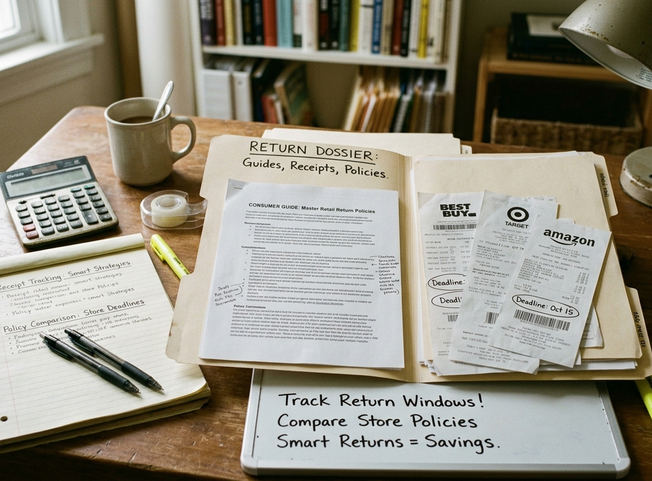
Same-day organization prevents small losses
Receipt emails get buried under shipping notices and promotional mail. Paper receipts fade, get tossed with bags, or disappear into coat pockets. Thermal paper receipts can fade to illegibility within roughly 45 to 60 days when exposed to heat, light, or friction in a wallet.
Policy pages can also become harder to find after a promotion ends. A screenshot taken on purchase day gives you the policy language that influenced your decision.
Name the file so future-you can find it
Use a plain naming format with the retailer, item, price, and deadline. For example: HomeStore-Sofa-Delivery-May-14-Return-Deadline-June-13.
That file name does more than organize paperwork. It turns the return deadline into something visible every time you search receipts, photos, or cloud storage.
- Receipt or invoice
- Order confirmation
- Delivery or pickup date
- Serial number and model number
- Warranty card or registration confirmation
- Screenshot of the return policy
- Financing or promotional payment terms
- Photos of the box, labels, accessories, and condition at arrival
Inspect and Test Without Burning the Return Option
The first inspection should answer one question: can this item stay eligible while you decide whether to keep it?
Open packaging carefully. Keep inserts, manuals, remote controls, cords, brackets, extra screws, dust bags, tags, and serial-number labels. Avoid unnecessary assembly until measurements and condition checks are done. If damage is visible, document it immediately with clear photos before moving the item around.
Test enough, not recklessly
Electronics create a tricky balance. Leaving a device untouched may protect the packaging, but it does not reveal dead pixels, broken ports, battery issues, fan noise, or missing features. A better approach is to test the core functions while keeping the product as close to returnable condition as possible.
For a television, test the screen with protective film still on if possible. For a sofa, measure it in the room before removing tags. For an appliance, confirm dimensions and cosmetic condition before installation. For a laptop, verify the advertised specifications before transferring personal data or making the device hard to reset.
Many major appliance retailers require cosmetic delivery damage to be reported within a strict 48-hour window, even when the standard return policy says 14 or 30 days. That makes delivery-day inspection more than a neat habit; it can determine whether the claim is treated as damage on arrival or ordinary wear.
Expert Tip: Photograph the item before, during, and after unpacking if it arrives by freight or delivery crew. The pictures should show the box, shipping label, damage, accessories, and the item in place before installation.
Installation, stains, wear, missing packaging, or removed tags can change a straightforward return into a repair, exchange, restocking-fee negotiation, or denial.
Set Decision Gates Before the Deadline
A return window should not sit on a calendar as one lonely reminder. Expensive items need owner decisions: keep, exchange, repair, return, or escalate.
Build checkpoints from the moment the purchase is made. The exact dates will vary by retailer policy, but the sequence stays useful: purchase date, delivery date, inspection date, halfway review, final decision date, and last safe shipping or pickup date.
Use a final decision date, not just a deadline
The final decision date should land several days before the retailer’s official deadline. Oversized returns often require repackaging, customer service contact, label generation, or pickup scheduling. Generating a return merchandise authorization for oversized items can take customer service departments a few business days before a shipping label or pickup order is issued.
If the official return deadline is Friday, deciding on Friday afternoon is not really a decision plan. It is a scramble.
- Purchase day: Save the receipt and policy screenshot.
- Delivery day: Photograph packaging and inspect condition.
- Inspection day: Confirm dimensions, accessories, model numbers, and visible defects.
- Halfway review: Decide whether the item is working in real use.
- Final decision date: Choose keep, exchange, repair, return, or escalate.
- Last safe return date: Leave room for labels, pickup appointments, or store processing.
Big-Ticket Pre-Purchase Return Checklist
- Confirm exactly when the return clock starts: purchase date, shipment date, pickup date, or delivery date.
- Identify any restocking fees or return shipping costs hidden in the policy terms.
- Verify whether the item falls under final sale, clearance, custom order, mattress, jewelry, electronics, or installed-appliance restrictions.
- Check whether online purchases can be returned in store or must ship back through a specific carrier.
- Ask how the refund will be issued: original payment method, store credit, exchange, or financing adjustment.
Handle Denials, Fees, and Edge Cases Calmly
Complicated returns reward calm, organized communication. Ask for the specific policy clause, provide documentation, keep the message concise, and use writing when possible.
That last part matters. A chat transcript or email chain is easier to reference than a rushed phone call where each side remembers the conversation differently.
When the answer is no
If a return is denied, do not start with a speech. Start with the facts: purchase date, delivery date, policy language, condition of the item, photos, and the remedy requested. Then ask which policy clause controls the decision.
Restocking fees, pickup fees, missing packaging disputes, late deliveries, damaged-on-arrival claims, and mismatches between online guidance and store staff guidance all need the same basic approach. Bring the return dossier, stay specific, and separate the issue from the frustration.
Know when it is a warranty problem
A retailer return and a warranty do different jobs. A return policy governs whether the retailer will unwind the sale. A warranty may cover defects after the return window, but it usually does not solve fit, color, comfort, or buyer’s remorse.
For billing disputes, the Fair Credit Billing Act generally requires credit card chargeback disputes to be filed within 60 days after the first bill containing the error was mailed. That does not replace the retailer’s return process, but it can matter when the issue involves billing errors, undelivered goods, or unresolved documentation.
Before the next appliance, mattress, laptop, sofa, television, treadmill, piece of jewelry, or expensive gift goes into the cart, what exact path will get your money back if the purchase fails the real-life test?