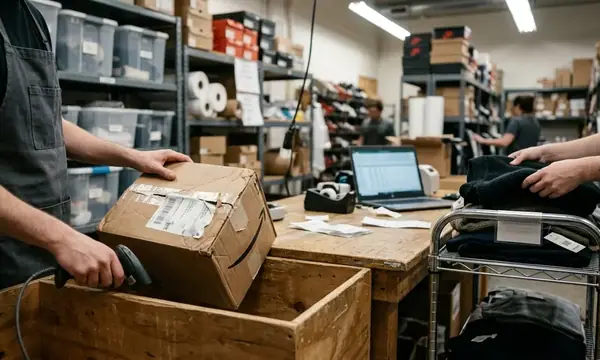

Why Receipts Became the Dividing Line
Why does the same sweater feel effortless to return with a receipt in hand and suddenly negotiable without one?
The answer sits inside a quiet shift most shoppers never noticed. Retail returns once ran on store discretion, closer to a handshake than a system. A manager looked at the item, made a judgment, and issued whatever refund seemed fair. That flexibility produced inconsistent refund valuations across different store locations, and retailers eventually treated it as a leak worth sealing.
Between 2014 and 2019, most large chains moved from manual ledgers to centralized database lookups. The barcode became the arbiter. Point-of-sale systems began tracking return velocity over rolling 30 to 90-day periods, which let stores separate ordinary shoppers from patterns that looked like abuse. Where analysis of shrink rates pointed to manual overrides as the source of uneven refunds, the fix was to remove human guesswork from the transaction.
A receipt now changes five things at once: your proof of purchase, the refund method available to you, the refund amount, your confidence about the return window, and how much discretion the associate at the desk actually holds. Understanding each of those levers is the difference between a smooth return and a frustrating one.
Receipt Required vs No-Receipt Returns at a Glance
Before working through the details, it helps to see the two paths side by side. The table below reflects how most retailer policies treat each scenario, not a guarantee for any single store.
| Feature | With Receipt | Without Receipt |
|---|---|---|
| Proof of Purchase | Verified instantly via barcode | Requires ID, card lookup, or manager approval |
| Refund Amount | Exact price paid | Lowest selling price in the last 60 to 90 days |
| Refund Method | Original payment method | Merchandise credit or store voucher |
| ID Requirement | Usually none | Government ID often requested |
| Deadline Enforcement | Purchase date is visible and settled | Estimated, disputable, and stricter |
| Exceptions | Few | Serial-numbered and opened goods flagged |
Card reversals typically take 3 to 5 business days to clear, while merchandise credit vouchers issue immediately. That timing gap alone shapes which outcome feels better depending on whether you need the money back or simply want to shop again.
What Usually Changes When You Have the Receipt
The clearest advantage is the refund destination. When the transaction is identifiable, the store can reverse the charge to your card, reload a gift card, or credit a digital wallet without hunting for a workaround. Cash purchases usually come back as cash. The system already knows how you paid, so it simply retraces the path.
Price certainty is the second protection, and it matters more than people expect.
Say you bought a jacket at full price in early autumn, then decided to return it after the season turned and the same jacket hit a clearance rack. Without proof, the register may only offer the current, discounted figure. The receipt locks in what you actually paid.
Then there is deadline confidence. Standard return windows tend to run 30 days, and the receipt makes the purchase date unarguable. Investigators who considered verifying dates through manufacturer batch codes abandoned the idea, since items sit in distribution centers for 14 to 45 days before hitting shelves — the code says when it was made, not when you bought it. Your receipt closes that gap entirely.
What Usually Changes Without a Receipt
Stores often still take the item back. The refund simply changes shape.
The most common tradeoff converts your money-back expectation into store credit or merchandise credit. You keep the value; you lose the flexibility to spend it elsewhere. For a retailer you shop at regularly, that may cost you nothing in practice. For a one-time purchase, it stings.
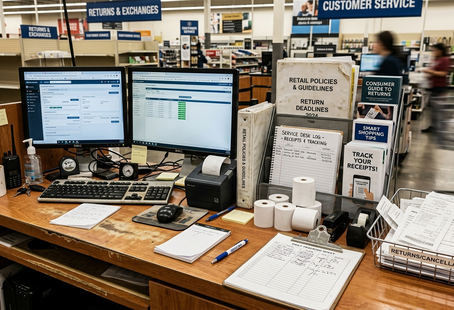
Expect an ID check. To curb return fraud without turning away honest shoppers, loss prevention teams built ID-tracking algorithms that flag excessive unreceipted returns rather than banning customers outright. Your driver's license is not being collected to punish you; it feeds a velocity model watching for patterns.
The refund amount carries its own risk. System-available price lookups usually default to the lowest selling price offered within the preceding 60 to 90 days. If the item dipped during a flash sale you never attended, that low figure can become your refund.
Caution: If a barcode is no longer in the store's active inventory database, some retailers systematically deny the unreceipted return outright. An item pulled from the catalog can leave you with no refund path at all.
Items Where No-Receipt Returns Get Harder
Not all merchandise is treated equally at the service desk. Low-risk categories move fast, while others invite scrutiny.
- Usually straightforward: unopened apparel, basic household goods, and current-inventory items the register recognizes immediately.
- Closer review: electronics, luxury goods, beauty products, baby gear, appliances, and seasonal items.
The reason is traceability and resale value. Serial-numbered electronics get verified against the original transaction log, so an unreceipted return either matches a real sale or it does not. Opened personal-care products carry hygiene and safety limits that override goodwill. High-value merchandise simply draws more caution because the loss on a fraudulent return is larger.
Electronics also compress the timeline. Many electronics policies restrict returns to a 14 to 15-day window, far shorter than the general 30-day norm, which leaves little room for a disputed purchase date.
Holiday gifts sit in their own bracket. Seasonal extensions often push standard deadlines into late January, a genuine help for the recipient who opens a box on the 25th. Those grace periods rarely rescue opened personal-care products or activated electronics, and a no-receipt gift can still be capped at store credit or the current selling price.
Policy, Discretion, and Your Consumer Options
There are two documents at any return counter: the policy the retailer posts, and the judgment of the person standing in front of you. They are not the same thing.
Manager discretion still exists, and it varies with store traffic volume and time of day. A slow Tuesday morning tends to produce more flexibility than a Saturday afternoon rush. This is not a rule you can rely on, but it explains why two people describe wildly different outcomes for the identical item.
Record-keeping is where you hold real leverage. Consumer protection agencies built their guidance by reviewing dispute outcomes and found that shoppers with physical or digital proof prevailed far more often — particularly on high-ticket items, typically defined in disputes as purchases above $250 to $500. The FTC guidance on returns, refunds, and resolving problems with a business reinforces the same principle: review the terms before you buy and keep your records when a dispute arises.
One honest limit worth stating: a posted return policy is a courtesy, not a legal entitlement, unless a specific law or written guarantee applies to your purchase. Treat generous policies as a benefit you can lose, not a right you can demand.
The Smart Return Strategy: Keep Proof, Even When It Is Not Required
The whole system rewards one habit: keeping proof you may never need.
Expert Tip: Digital receipts stored inside retailer apps usually stay in active purchase history for 12 to 18 months before they slide into archived database retrieval. Pull anything older into your own files before that window closes.
A practical plan:
- Save digital receipts and let loyalty accounts capture purchases when you are comfortable with the tracking.
- Photograph paper receipts for any significant purchase the moment you get home.
- Keep original packaging until the return window has fully passed, especially for serial-numbered goods.
A no-receipt return is worth trying when the item is unopened, it is clearly the retailer's own current inventory, you are returning a gift, or a card lookup can reconstruct the sale. Those conditions play to the system's strengths.
Avoid the gamble on expensive electronics, final-sale tags, opened hygiene-sensitive goods, and anything bought during a major clearance event, where the lowest-recent-price rule will gut your refund.
Main Point: Screenshot the receipt for every purchase over roughly $50 and store it in one dated folder. Do that consistently, and the receipt-versus-no-receipt question stops mattering to you — because you will always be on the easier side of the counter.