What “Easier” Means When You Return Something
An easy return is not the one that feels convenient in the moment. It is the one that minimizes four things at once: time, cost, uncertainty, and the number of steps between the decision to return and the arrival of a refund or exchange.
Every return sits somewhere on that scale. A pair of shoes mailed back with a prepaid label may cost nothing but leave you waiting two weeks. A quick drive to a store may burn an hour but hand you store credit before you reach the parking lot. Both can be “easy,” depending on what you value most that day.
The tension is familiar. Online returns feel comfortable because they begin at home, on your own schedule, without a line. In-store returns feel fast because a person stands in front of you, inspects the item, and processes it directly. Neither instinct is wrong. Neither is complete.
Ease depends almost entirely on your situation. Distance to the nearest store, the size of the package, whether you own a working printer, how urgently you need the money back, the original payment method, and the retailer's own policy all shift the calculation. Where reported refund timelines suggest a pattern, processing delays run from about 3 to 10 business days depending on the payment gateway alone — before you factor in shipping. And once driving distances exceed roughly 12 to 15 miles, the convenience metric usually tips toward mailing the item back.
Quick Verdict: Which Return Method Wins by Situation?
There is no universal winner, so it helps to think in scenarios rather than declarations.
Online returns tend to win for small, non-urgent items when the retailer supplies a prepaid label or a QR code for label-free drop-off. If you do not need the refund this week and the item fits in a manageable box, mailing it back costs you almost nothing but a short walk to a drop-off point.
In-store returns tend to win when you need an exchange, want immediate confirmation, have no packaging left, or simply live near a store. Swapping a medium shirt for a large is trivial at a counter and slow by mail.
Standard return windows typically span 14 to 30 days from the date of delivery or purchase, which sounds generous until a holiday backlog or a slow carrier eats into it. Large, fragile, assembled, or third-party marketplace items complicate both routes. A dresser you have already built is not going back in its box, and a marketplace seller may enforce rules that override the platform's friendly headline policy.

Where Online Returns Are Easier—and Where They Slow You Down
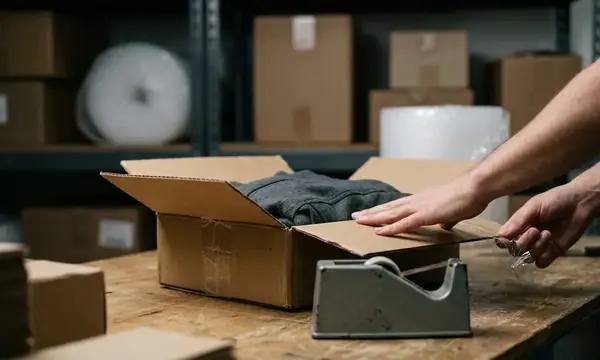
The online return workflow is predictable once you have done it a few times:
- Sign in or locate the order using an email confirmation.
- Select the item and choose a reason from the dropdown.
- Pick refund or exchange.
- Print a shipping label or generate a QR code.
- Repackage the item securely.
- Drop it off at a carrier location or schedule a pickup.
- Wait for the carrier scan, then wait for the refund.
The advantages are real. No store trip. No dependence on store hours. It is often the only route for online-only brands, and it is genuinely the sensible choice when the item was delivered far from any physical location.
The friction hides in the last steps. Missing packaging can derail everything. Label-printing requirements assume a working printer. Generated return labels often expire after about a month if the carrier never scans them, quietly resetting your effort. Shipping fees sometimes get deducted from the refund. And then there is the wait: carrier transit and warehouse processing can add roughly 5 to 14 business days before a refund is even initiated, during which the parcel exists in an anxious limbo of tracking pages.
Caution: A shopper who drops off an unboxed item at a carrier location that only accepts pre-packaged returns can face unexpected packing material fees at the counter. Confirm the drop-off point's packaging rules before you leave home.
One catch worth naming: QR code drop-offs require you to live within a reasonable radius of a participating carrier's storefront. That excludes many rural shoppers, for whom the “label-free” promise still ends in a long drive.
Where In-Store Returns Are Easier—and Where They Become a Hassle
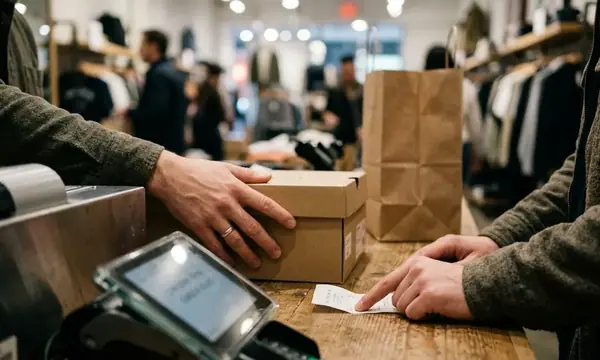
The in-store workflow is shorter to describe and often shorter to complete:
- Bring the item, the receipt or order barcode, and the original payment card when required.
- Wait at the customer service desk.
- Receive a refund, store credit, or exchange confirmation on the spot.
What you gain is human help and immediate inspection. An associate can approve a return, resolve a dispute, and hand you a substitute in one visit. Exchanges for size or color are effortless. There is no packaging pressure and, importantly, a clear handoff moment — you walk away knowing the item is no longer your problem.
Speed is the quiet advantage. Credit card refunds processed at a physical register typically take 2 to 5 business days to post, faster than the mail-in route, and you get verbal or printed confirmation immediately rather than trusting a tracking number.
In-store shines for gifts without a gift receipt, damaged goods a person needs to see, and any purchase where you need a working replacement today.
The hassle is the trip itself. If the store is distant, if parking is bad, or if the return desk closes early, the “fast” option turns slow. More on those closing hours shortly.
The Policy Details That Actually Decide the Easier Route
Convenience is only the surface. The policy fine print usually decides which method is genuinely easier, and it rewards the shopper who reads before acting.
Return window rules
Check whether the clock starts on the purchase date or the delivery date, because for online orders those can differ by a week or more. Holiday extensions often apply only to purchases made between November 1 and December 24, pushing the deadline into late January. Memberships sometimes unlock longer windows. Electronics, luxury goods, seasonal items, and anything opened frequently carry stricter, shorter windows than the store's headline policy.
Cost rules
Free return shipping is common but not universal. Some retailers deduct a prepaid label's cost from your refund. Restocking fees for opened electronics frequently range around 10% to 15% of the purchase price, which can quietly erase the savings you thought you were getting. Packaging requirements and carrier-pickup charges add their own line items.
The variable that trips up the most shoppers involves third-party sellers. Marketplace sellers operating on major retail platforms often enforce stricter return windows and mandate buyer-paid return shipping, overriding the platform's standard policy entirely. The friendly return promise on the homepage may not apply to the item in your cart. The Federal Trade Commission’s online shopping guidance is a useful reference for understanding your baseline consumer protections before a dispute escalates.
One honest limitation applies to all of this: policies get revised without much fanfare, so the terms you memorized last season may have quietly tightened by the time you need them.
A Simple Decision Framework Before You Choose
An early version of the return-tracking approach behind returnGuru leaned on a twelve-point decision tree. It collapsed under its own weight — shoppers abandoned it before finishing. What survived is far shorter, because a framework you actually use beats a thorough one you ignore.
Choose in-store if you:
- Need an exchange today or a working replacement.
- Live near the store.
- Lack the original packaging.
- Want direct, in-person confirmation.
Choose online if you:
- Live far from the nearest location.
- Have a label-free drop-off or prepaid label available.
- Are returning something small and easy to box.
- Have enough of the return window left to absorb shipping and processing time.
Choose extra caution for expensive, fragile, serialized, or marketplace items. Photograph the condition before you move it, save the box, and read the exact return instructions first. For anything mailed, set a calendar reminder 4 to 5 days before the deadline; that buffer covers the carrier delays that no policy page will warn you about.
Main Point: The best method is not the one with the most perks. It is the one with the fewest ways to fail for your specific item, deadline, and refund urgency.
The Easier Return Is the One With the Fewest Failure Points
Online returns are easier when convenience from a distance matters most. In-store returns are easier when speed, exchanges, and certainty matter most. The right answer changes with the item in your hands, the deadline on the calendar, the proof you can produce, and how badly you need the money back.
One detail deserves a final flag: customer service desks often close between 8:00 PM and 9:00 PM even when the store stays open later, so “open until ten” does not always mean the return counter is staffed.
Picture the choice at its most ordinary. A shopper sits at the kitchen table after dinner, a shoebox on one side and a phone open to a store's hours on the other. The mail-in label is printed and ready. But the exchange deadline is tomorrow, the store is fifteen minutes away, and the return desk stays open until eight. She checks the clock: 6:40. She slides the label aside, grabs her keys, and drives over. Twenty minutes later she walks out with the correct size in the bag — not a tracking number, not a waiting refund, but the thing she actually needed.